“for centuries” search results (9000)
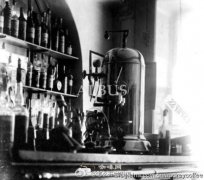
Coffee Chronicle the Development of Coffee History and Culture
In the 6th century, on the plateau of Abyssinia, a shepherd named Caldai drove goats to the new prairie for grazing, and accidentally found coffee fruit due to the accidental feeding of goats. In the early 10th century, Dr. Daggers, a famous doctor in Iraq, admitted and documented the pharmacological effects of coffee. This is one of the earliest valuable medical records of coffee. In the 11th century, the Arabs invented the whole
2015-08-19 Coffee Chronicle of events Development course History and Culture 6th Century Bizi Nigeria Plateau
Coffee Chronicle the Historical Development of Coffee Culture
In the 6th century, on the plateau of Abyssinia, a shepherd named Caldai drove goats to the new prairie for grazing, and accidentally found coffee fruit due to the accidental feeding of goats. In the early 10th century, Dr. Daggers, a famous doctor in Iraq, admitted and documented the pharmacological effects of coffee. This is one of the earliest valuable medical records of coffee. The Arabs invented the whole coffee in the 11th century.
2015-06-18 Coffee Chronicle of events Cultural History Development 6th Century Bizi Niya Plateau a
Introduction of coffee utensils
Turkish coffee pot: popular among the people in the Middle East in the early 19th century, it is called Evelick. It is about six inches tall and has a capacity of about three to four people. it has a long handle, mostly made of pure copper or brass, and a few are internally tinned. Naples turnpot: in the mid-19th century (circa 1860), the French invented a relatively simple coffee filter until 1950
2016-06-01 Coffee utensils introduction Turkey Coffee maker 19th Century early Middle East region
Coffee training Culture Coffee and Japanese Culture
As early as the end of the 17th century, the Dutch brought coffee to Asia in the early 18th century, and coffee was soon introduced to Japan. Before and after the Meiji Restoration, Japan advocated total westernization, and the coffee culture with Dutch flavor took root in Japan. During the Taisho period (1879-1926), due to the pervasive atmosphere of freedom and democracy, fresh and luxuriant culture, cafes have been very prosperous. But with the Japanese army,
2015-03-16 Coffee training culture Japan as early as the 17th century the end of the century the eighteenth century the Dutch
Coffee planting conditions Coffee planting techniques in China
In the 19th century, coffee was grown almost all over the country, followed by a coffee boom that lasted nearly a century. The extensive cultivation of coffee has brought wealth and prosperity to Brazil. At the beginning of the 20th century, Brazil accounted for more than 75% of the world's total coffee production, thus winning the reputation of the coffee kingdom. Coffee is one of the important pillars of Brazil's national economy. The whole country
2016-07-16 Coffee planting conditions China Technology 19th Century Brazil several
Erqi's coffee culture can be traced back to the 16th century.
Turkish coffee, on the other hand, carries its heavy cultural atmosphere and mysterious atmosphere. Turkey's coffee culture dates back to the 16th century, and people there still retain its oldest method of making coffee. They grind the deeply roasted coffee beans into fine powder, add sugar and cold water, simmer over low heat for half an hour in a coffee brewer made of red copper, and make a small cup of 2.
2014-08-12 Its coffee culture can be traced back to the 16th century Turkey coffee more
Turkish coffee shops promote the British democratic revolution
The medieval theory of divine kingship began to crumble in England in the seventeenth century, and after the Glorious Revolution the basis of government had shifted from kings as God's agents on earth to the hands of people bound together by social contracts. After experiencing this great historical turning point, it can be said that the creed of modern democratic society, that is, the will of heaven, was formed. Ren Min Tong
2014-07-30 From Turkey Its Cafe Push England Democratic Revolution Progress 17th century
Coffee and the Story of Coffee Culture in Japan
As early as the end of the 17th century, the Dutch brought coffee to Asia in the early 18th century, and coffee was soon introduced to Japan. Before and after the Meiji Restoration, Japan advocated total westernization, and the coffee culture with Dutch flavor took root in Japan. During the Taisho period (1879-1926), due to the pervasive atmosphere of freedom and democracy, fresh and luxuriant culture, cafes have been very prosperous. But with the Japanese army,
2015-10-15 Coffee Japan coffee culture story as early as the 17th century the end of the century the 18th century the Netherlands
Taiwan Coffee Manor boutique coffee
In the 18th century, in 1884 (Guang Xu's 10th year), the British introduced coffee for trial planting in the three Gorges of Taipei. during the Japanese occupation era, the Japanese saw that Taiwan's climate and soil were suitable for coffee, so they introduced "Arabica" from abroad and successfully planted it in the north. Mizuho invested a lot in planting and had a good yield. In the 19th century, in 1941, the output was rich, the quality and flavor was good, which made coffee in Taiwan's complete victory period. No.
2016-06-01 Taiwan Coffee Manor Fine goods 18th Century 1884 Guang Xu 10 years
Real mellow thickness of Ugandan coffee flavor taste manor characteristics of boutique coffee beans
There was an emirate called Kitala in present-day western Uganda before the 13th century AD. In the 13th and 14th century, the nomadic Bachwezi conquered the country. From the end of the 15th century to the beginning of the 16th century, the Luo people who originally lived in southern Sudan went south to replace the rule of the Bachwezi, established the kingdom of Buniolo and established the Babito dynasty in Buganda. These foreign rulers were soon engaged in local farming.
2016-09-02 Thickness Uganda coffee flavor taste manor producing area characteristics boutique
Cafe de flore and les deux maggots, the century-old French coffee shops.
Everyone knows that there are many cafes on the streets of France, especially in Paris: the most famous are Caf de flore and les deux maggots, two century-old shops in my avatar on the Rue Saint-Germain. What I am going to tell you today is not how fragrant the coffee is in these two old shops, which is not the main reason why these two coffee shops are so famous so far; nor are they.
2015-07-29 France Coffee Century Old Store Caf flore les deux
Coffee common sense coffee aroma in Paris, France in the 17th century
I've been going to many cafes in recent years, and I'm getting bored. I often daydream about the old cafes, the old beauties that can only be read in books but cannot be experienced in person. For example, when it comes to cafes in Paris today, people's first impression is the relaxed and enjoyable atmosphere of relaxed seats in the shade of trees or in the Arbor. But in the past, Parisians drank coffee, which was not like this at all. Straight
2015-06-12 Coffee common sense 17th century France Paris in recent years cafes more and more gradually
Taiwan coffee boutique coffee Taiwan coffee
In the 18th century, in 1884 (Guang Xu's 10th year), the British introduced coffee for trial planting in the three Gorges of Taipei. during the Japanese occupation era, the Japanese saw that Taiwan's climate and soil were suitable for coffee, so they introduced "Arabica" from abroad and successfully planted it in the north. Mizuho invested a lot in planting and had a good yield. In the 19th century, in 1941, the output was rich, the quality and flavor was good, which made coffee in Taiwan's complete victory period. No.
2016-05-19 Taiwan coffee flavor boutique 18th century 1884 Guang Xu 10 years
Coffee Culture Coffee and the Story of Arapai people
Coffee was the exclusive drink of Arabian people for more than 1000 years from the 7th century to the 17th century. Arabs brought the habit of drinking coffee to the countries they visited, from the Balkans to Spain to North Africa. After the decline of the Roman Empire, the center of world development gradually shifted to the Islamic world. Slowly, the word coffee entered the languages of countries all over the world in different forms.
2014-10-13 Coffee Culture Coffee Story Coffee and Arabian Story
World Coffee-2
The first European description of coffee in 1573 was through German doctors staying in Syria. In the second half of the 16th century, the European people who traveled on the east coast of the land gradually spread. The British East India Company was established in 1660 and the East India Company was established in the Netherlands in 1602. The East India Company refers to the trade between Asia and Europe, South Asia and the East in the 17th and 19th centuries.
2014-08-07 Coffee knowledge World Coffee Coffee Encyclopedia
Coffee spread-2
The first European description of coffee in 1573 was through German doctors staying in Syria. In the second half of the 16th century, the European people who traveled on the east coast of the land gradually spread. The British East India Company was established in 1660 and the East India Company was established in the Netherlands in 1602. The East India Company refers to the trade between Asia and Europe, South Asia and the East in the 17th and 19th centuries.
2014-08-12 Coffee culture coffee spread coffee history
The origin of coffee beans
Legend has it that Shek, the chief expelled by his people for crime, was deported from the mountains of Yemen in 1258. Omar, who was exiled to the remote city of Vasaba (in Arabia), when he was walking exhausted on the mountain, he found the birds on the branches making a very sweet cry after pecking at the fruit of the tree. So he boiled the fruit with water, only to send out a rich temptation.
2016-06-08 Coffee beans Origin practice Legend AD 1258 Yemen Mountain area
When did coffee become popular?
The cultivation and production of coffee in the 17th century was monopolized by Arabs. It was used mainly in medicine and religion, doctors and monks recognized coffee as refreshing, refreshing, invigorating, strengthening, hemostatic, etc.; the use of coffee began to be documented in the early 15th century, and it was incorporated into religious ceremonies during this period, as well as appearing in folk as a daily drink. Islam
2016-08-01 coffee beans origin coffee when popular rise 17th century species
Napoleon and St. Helena Coffee
France outstanding military home Napoleon can be called the most romantic, sad character in the history of coffee, his brandy private coffee, portable cylindrical Turkish grinder, are all good talk. Although he was a mid-18th century to early 19th century figure, but God as early as the early 16th century began to find him the most romantic, sad ancient land-St. Helena Island. (425 square meters)
2015-04-02 Napoleon Saint Helena Lena coffee
Introduction to Napoleon and St. Helena Coffee
Napoleon, an outstanding French military strategist, can be called the most romantic and sad figure in the history of coffee. His brandy private coffee and the cylindrical Turkish bean grinder he carries with him are all rumors. Although he was a figure from the middle of the 18th century to the early 19th century, God began to find the most romantic and sad place for him at the beginning of the 16th century-St. Helena. (area 425 square
2015-02-12 Napoleon Saint Herr Lena Coffee introduction France Outstanding strategist